
If you had to leave your house in the next 10 minutes, what would you grab?
Your phone. Your wallet. Your keys. Maybe your medications, family heirlooms, a charger … really anything you can think of in those 160 seconds.
But what if you already had a bag packed with the essentials you might need to stay safe until help arrives?
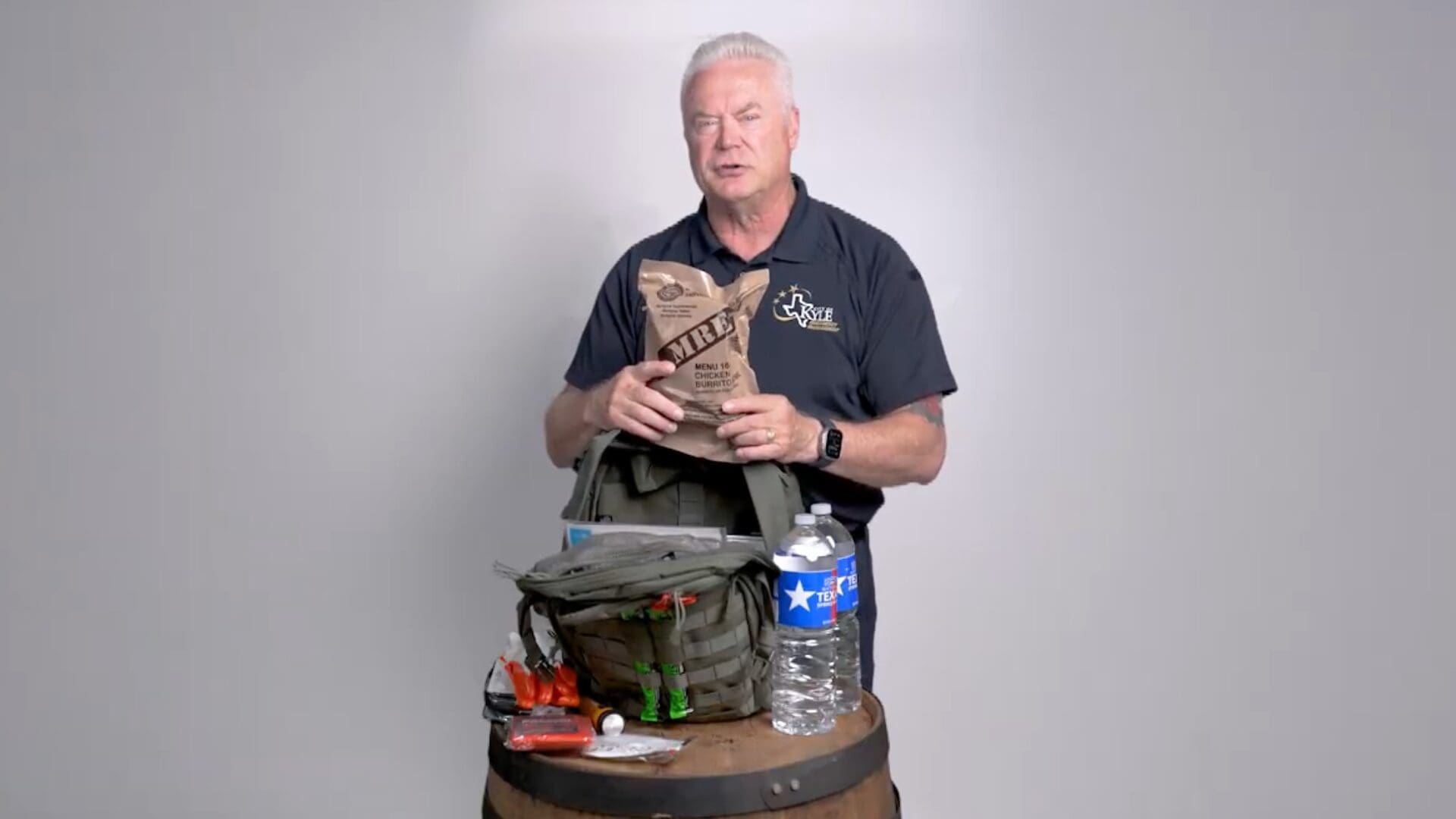
September is National Preparedness Month, making it a good time to take a closer look at how prepared you and your household are for an emergency. One simple step City of Kyle Emergency Preparedness Coordinator Jimmy Johnson recommends is putting together a “go bag,” a portable kit with supplies to help you stay safe and comfortable during an emergency.
You may think building a well-stocked emergency kit is difficult or expensive, but it doesn’t need to be. You can gather supplies over time, starting with items you may already have at home like canned food and first aid supplies. Your kit should include the essentials you and your family might need, so you don’t need to scramble in an emergency.
Start with a bag that works for you.
A go bag doesn’t have to look a certain way. Johnson said the bag itself can serve a variety of functions and can be anything from a Rubbermaid container to a multifunction backpack.
He recommends a backpack because it allows you to carry your supplies while still leaving both hands free to do anything else you may need to do during an emergency.
“Some of the things that you’ll see in here today are just examples of items that we put in and categories,” Johnson said. “You may find something that meets your needs better as we talk through this process.”
Signal for help and find your way.
One of the first things Johnson recommends is an emergency whistle.
Whistles are important for signaling, particularly in situations where you may need to get someone’s attention or call for help.
Johnson’s bag also includes 12-hour glow sticks. These can be broken to provide diffused light when you may not be able to use another source of lighting, such as a candle or flashlight.
The bag also contains two flashlights, providing another important way to have light available during an emergency.
Pack tools that can do more than one job.
When you’re packing a limited amount of space, items that can serve multiple purposes are especially useful.
Johnson recommends including some type of multitool, which can be used to make adjustments, cut wire and handle a variety of other tasks with its screwdrivers, knife, files and other tools.
Duct tape is another simple item that can have plenty of uses during a crisis.
“It can repair everything from tears in clothing to broken windows,” Johnson said. He also explained that duct tape can be used to secure gloves around your hands if you have to get into a wet environment. It can also be used to cover bandages and provide a water barrier during rain or flooding.
Protect yourself from what’s around you.
Emergencies can bring hazards that you may not normally encounter, so Johnson recommends packing items that provide protection from the environment.
N95 masks are filtration masks that can block airborne particles from wildfires and storms and can also be used in the event of the spread of disease. Emergency ponchos can protect you from rain as well as hazardous debris that may be coming from the sky. During a wildfire, Johnson said a poncho can help keep embers from getting onto your clothing.
The go bag also includes safety glasses to help keep debris out of your eyes and lightweight rubber gloves that provide a layer of protection for your hands while still allowing you to manipulate objects.
Don’t overlook the everyday essentials.
Some of the items in a go bag may seem ordinary, but they can become especially important when you’re away from home.
Johnson recommends bringing something to write with, including a pen, permanent marker and notepad. These can be used to write down important information you receive from emergency first responders.
A travel hygiene kit is another important addition.
“If you’re going to be leaving your house,” Johnson said, “it’s important … to be able to do basic hygiene functions such as brush your teeth, wash your hands, and try to maintain some type of hygienic environment for you and your family.”
Water is essential.
When it comes to emergency preparedness, hydration should be a priority. Johnson recommends to always have at least a 2-liter bottle of water with you.
But that shouldn’t necessarily be the end of your water planning. Johnson pointed out that the daily water needs for each person can exceed a gallon, so it’s important to think proactively about where you can get additional water and how you will refill your supplies. Keeping reusable plastic bottles can help, allowing you to bring containers with you when you reach areas where water is being distributed.
Be ready to treat minor injuries
A first aid kit is another essential part of a go bag.
Johnson’s kit includes supplies for minor scrapes, scratches, bumps and bruises, including items such as bandages, tweezers and fingernail files. Having those basic supplies on hand can help you take proactive measures when injuries happen and potentially prevent additional accidents while you’re away from your normal home environment.
Bring food and a way to get information
Johnson recommends including an MRE, or Meal, Ready-to-Eat. An MRE is a standard-issue survival meal containing 1,200 to 1,500 calories. Plan to pack two to three MREs per person per day.
A portable emergency radio is also an important addition, particularly one that combines a hand-crank radio with weather radio capabilities. The radio allows you to get information during a time of crisis through standard broadcast frequencies that these radios are preset to receive. Because it is hand-crank, you don’t have to worry about having power or backup batteries. The hand crank provides the power needed to operate the radio during an emergency.
Keep your important documents together
If you have to leave your home quickly, searching for important paperwork shouldn’t be part of the plan.
Johnson recommends keeping important documents in one place so you can grab them, put them in your go bag and be ready to leave in the event of an emergency. That can include identification, specific documents, information about your medicine and medical needs, your doctor’s information and phone numbers for emergency contacts.
Johnson’s examples include your Social Security card, passport, driver’s license, medical history information and insurance card. Having these documents together ahead of time means one less thing you have to worry about when an emergency happens.
Make your go bag your own
There isn’t one perfect go bag. Johnson emphasized that the items you pack should reflect your family’s needs. That includes your pets. If you have animals, make sure you’re prepared for their needs, too.
Most importantly, don’t wait until a crisis happens to start planning. “Crisis planning is important,” Johnson said. “The more you do now, the less you have to do when crisis hits.”
National Preparedness Month is a good reminder to take a few minutes now to think about what you and your family would need in an emergency. Pack a bag and make a plan for the people and pets who depend on you.
As Johnson put it, “Your preparedness is paramount to our success.”


